Learn How to Write Legislation
What is policy?
Policy is designed to tackle problems with academic affairs across campus. This can include everything from advising and course registration to transcripts and degrees, as well as other policies about academic support/resources, equity and access, and more!
Once you've established the problem you'd like to help solve, figure out if policy is the right approach. Distinguish between systematic problems, which may be addressed through changes in rules, processes, or implementation, and systemic problems, which are embedded in broader institutional structures and incentives. A strong policy proposal should identify where the problem comes from and explain why a particular policy intervention is an appropriate way to address it.
The Policy Process
The Senate of College Councils follows Echo’s 5 Steps to Policy Success:
- Research
- Consult
- Draft
- Present
- Implementation
Research
Ask yourself: “Is anyone addressing this already?”
And note that policy research doesn’t have to happen in isolation! Other schools may have already faced similar problems, developed useful solutions, or have people with expertise you can learn from. Reach out to student leaders, administrators, faculty, and organizations at other institutions to compare approaches. You don’t need to reinvent the wheel when someone else has already started solving the problem.
Consult
Talk to the people who will be involved in, affected by, or responsible for implementing your proposal. Consult with College Councils and other relevant parties early in the writing process. They can help strengthen the substance of your work and may become co-authors or sponsors.
Draft
We offer many resources for your policy drafting needs:
The executive summary (required) should be 2-5 sentences at most.
An FAQ section is not required, but it is highly recommended. Use FAQs to provide important context that you don’t want to have to repeat every time someone asks a question. For example, they may answer questions like "Why is this necessary?" or "What does this term mean?"
Whereas statements describe the status quo, the problem with it, and what needs to be changed.
Resolved statements state the proposed solution and to whom the policy is being sent, which may include administration or any relevant faculty.
Include any citations in footnotes.
The final draft need not exceed 3-8 pages.
Present
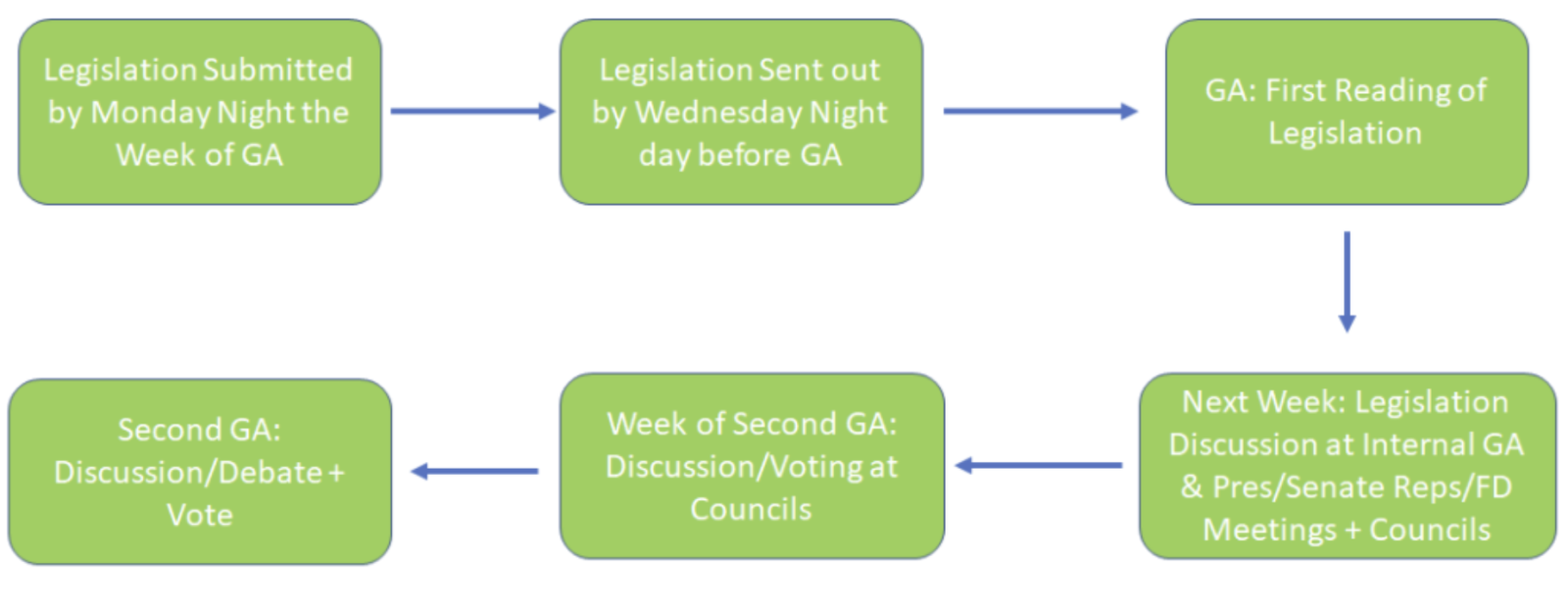
Tips for Presenting:
- Be professional, but relax (we don’t bite!)
- Write down questions/comments to revise if need be
Likely Questions:
- Have you met with relevant administration yet? What did they have to say?
- When is this going to take effect? (Spring 2021, Fall 2021, etc.)
- Which student population(s) will this affect? (Undergrad? Grad?)
- Anticipate these Qs in your FAQ page!
Implementation
Policy work often requires coordination beyond your own Council. Expect to meet with administrators and staff when applicable.
Most importantly, be patient: institutional change takes time. Within your Council, establish clear transition plans so that projects, relationships, and institutional knowledge continue beyond your term.